No.019
What Is a Bird Dog Exercise? Form, Mistakes and Easier Versions
On all fours, reach one arm forward and the opposite leg back, keep your back still and return. It looks simple, and done slowly it is one of the best beginner core moves.
- Posted
- Minutes needed
- 4 min
- Corner
- Fitness
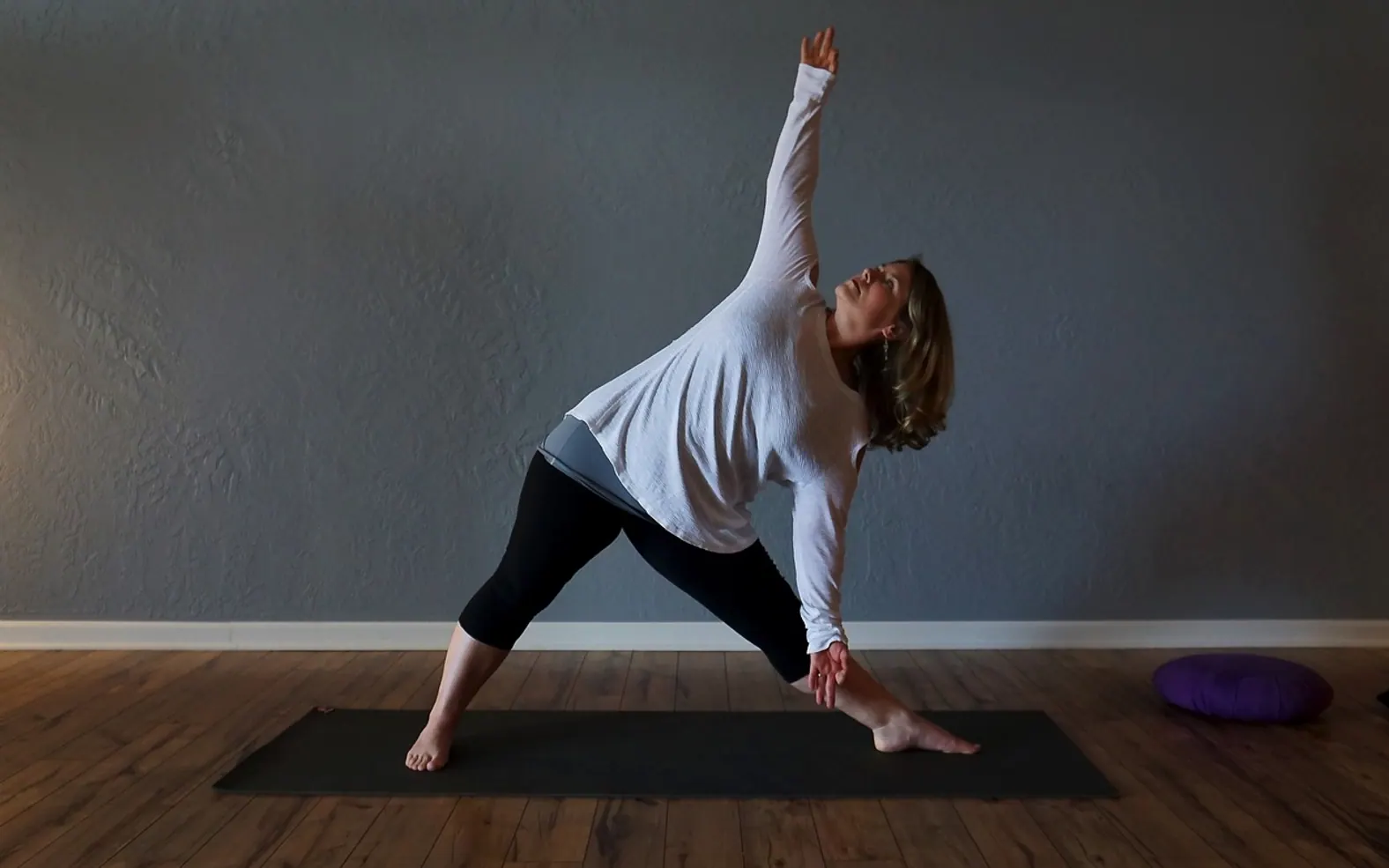
A bird dog is a floor exercise done on hands and knees: you reach one arm forward and the opposite leg back until both are level with your body, hold briefly, then return and swap sides. The aim is to keep your back and hips completely still while the limbs move. That makes it a gentle way to train the deep muscles around the trunk, the glutes and the shoulders, with no equipment and very little strain on the spine.
The name comes from the shape. With one arm pointing ahead and a leg stretched out behind, the position resembles a hunting dog pointing at a bird.
How to do a bird dog
- Kneel on a mat with your hands directly under your shoulders and your knees under your hips. Spread your fingers and press the floor away slightly so your upper back does not sag.
- Find a neutral back: neither arched nor rounded. Imagine a cup of water balanced on your lower back.
- Gently tighten your stomach as if bracing for a light poke in the ribs, without holding your breath.
- Slide your right arm forward and your left leg back at the same time, lifting them until they reach roughly hip and shoulder height. Lead with your heel and your fingertips.
- Pause for two or three slow breaths, keeping your hips level.
- Bring the arm and leg back to the start under control, then repeat on the other side.
Start with five or six slow repetitions per side. Quality matters far more than the count, and the move becomes harder the longer you hold each reach.
Common mistakes and fixes
| Mistake | What it looks like | Fix |
|---|---|---|
| Lifting the leg too high | Lower back arches and the hip rolls up | Stop the leg at hip height, or slightly below |
| Hips tipping sideways | Weight shifts onto the standing knee | Reach more slowly; picture headlights on your hips pointing at the floor |
| Rushing | Arm and leg swing up and drop | Count two seconds out, a pause, two seconds back |
| Craning the neck | Looking forward at the wall | Keep your gaze on the floor just ahead of your hands |
| Holding the breath | Red face, tense shoulders | Breathe out as you reach, in as you return |
Easier and harder versions
To make it easier
- Move only one limb at a time: arm reaches first, then the leg, before combining them.
- Slide the foot along the floor rather than lifting it.
- If your wrists complain, rest on your fists or on your forearms on a cushion.
To make it harder
- Hold each reach for longer, building up to around ten seconds.
- From the extended position, draw the elbow and knee toward each other under your body, then reach out again without touching down.
- Draw small squares in the air with the outstretched hand and foot while the torso stays still.
The dead bug: the same idea, upside down
If you search for how to do a dead bug exercise, you will find the bird dog's mirror image. Lie on your back with arms pointing to the ceiling and knees bent at right angles above your hips. Press your lower back gently toward the floor, then slowly lower one arm behind your head and the opposite leg toward the floor, stopping before your back lifts. Return and switch.
| Bird dog | Dead bug | |
|---|---|---|
| Position | Hands and knees | Lying on your back |
| Main challenge | Balance and keeping the hips level | Keeping the lower back down while limbs move |
| Good for | Glutes, shoulder stability, coordination | Front of the trunk, breathing control |
| Watch out for | Wrist or knee discomfort | Lower back peeling off the floor |
Doing both, a few slow sets each, covers the front and back of the trunk in under ten minutes.
Where it fits in a week
Bird dogs work well as part of a warm-up, as a short core block at the end of a session or on their own on busy days. They already appear in our beginner plan on how to start working out at home, and they pair nicely with short bursts of harder effort such as the intervals described in what anaerobic exercise is. If you enjoy that steady, held style of effort, our comparison of isometric vs isotonic exercise suggests more holds to try.
Safety notes
The bird dog is generally gentle, but stop if you feel sharp pain, numbness or tingling. Anyone with an existing back problem, a recent injury or surgery, or who is pregnant should check with a doctor or physical therapist before adding new exercises. A kneeling pad or folded towel protects sensitive knees.
Where we stand
Our guides inform, your clinician decides
We write to make everyday health topics easier to understand and easier to act on in small, safe ways. We are not trained clinicians, and an article can never know your history, your medicines or what a professional would notice in person.
If something you read here sits uneasily with advice you have been given face to face, follow the advice of the person who has actually seen you.
Sunniva, Ansgar, Briallen and Halvard