No.022
What Fruit Has the Most Protein?
Guava usually tops the list, with passion fruit, jackfruit and avocado close behind. Even so, fruit is a light source of protein, so pairing matters.
- Posted
- Minutes needed
- 4 min
- Corner
- Nutrition
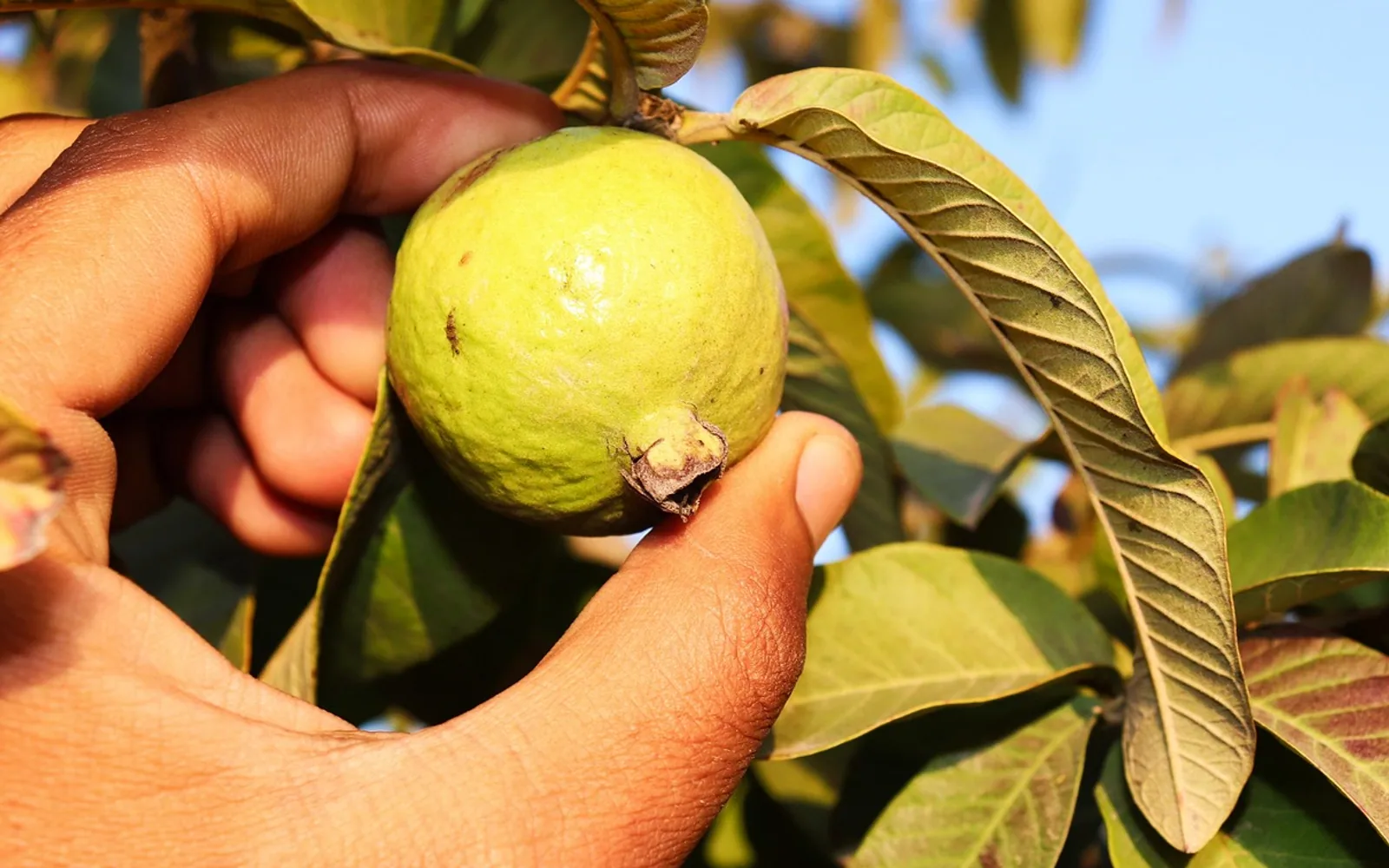
Among common fruits, guava usually has the most protein, followed by passion fruit, jackfruit, avocado and berries such as blackberries and raspberries. Dried apricots and other dried fruits look higher by weight because the water has been removed. Still, even the leaders provide only a few grams per cup, far less than yogurt, beans, eggs or tofu. Fruit is a great source of fiber, vitamins and flavor; for protein, it works best as a partner rather than the main act.
Why fruit is low in protein
Fruit is mostly water and carbohydrate. Its job in nature is to attract animals that spread the seeds, and sugar does that better than protein. The protein that is present sits mainly in the flesh and, for fruits with many small edible seeds, in the seeds themselves, which partly explains why guava, passion fruit and berries rank well.
Higher-protein fruits, ranked roughly
Exact amounts vary with variety, ripeness and portion, so the table compares fruits with each other rather than quoting precise figures. Nutrition labels and food databases give exact values for the products you buy.
| Fruit | Protein compared with other fruit | Also brings | Easy way to eat it |
|---|---|---|---|
| Guava | Among the very highest | Vitamin C, fiber | Sliced with the skin, or blended |
| Passion fruit | Among the very highest | Fiber from the seeds | Spooned over yogurt |
| Jackfruit | High for a fruit | Potassium, a meaty texture when young | Ripe pieces as a snack, young jackfruit in savory dishes |
| Avocado | High for a fruit | Unsaturated fat, fiber | On toast or in a smoothie |
| Blackberries and raspberries | Moderate | Lots of fiber | Frozen, in oats or blends |
| Kiwi | Moderate | Vitamin C | Halved and scooped |
| Dried apricots | Higher by weight, as water is removed | Iron, potassium, concentrated sugar | A small handful with nuts |
| Banana, orange, apple | Low | Easy carbohydrate, vitamin C (orange) | Paired with a protein food |
Do vegetables do better?
Generally, yes. People who also ask what vegetables are high in protein will find that green peas, edamame, sweetcorn, Brussels sprouts and spinach (by cooked weight) beat most fruit. Strictly speaking, peas and edamame are legumes, the family that includes beans and lentils, which is why they sit so far ahead. If you are building plant-based meals, legumes, tofu, tempeh, nuts and seeds do the heavy lifting.
How to turn fruit into a protein-rich snack
The simplest approach is to pair fruit with something that supplies the protein:
- Greek or skyr-style yogurt with passion fruit pulp or berries.
- Cottage cheese with sliced guava, pineapple or peach.
- Apple or pear slices with peanut or almond butter.
- A small handful of nuts with dried apricots or dates.
- A smoothie with milk, soy milk or silken tofu as the base.
- Overnight oats made with milk, topped with berries and seeds.
Combinations like these also slow the release of sugar from the fruit, so the snack feels more satisfying.
Building a higher-protein blend
- Choose one higher-protein fruit, such as frozen raspberries or a few chunks of guava.
- Add a main protein: plain yogurt, milk, soy milk or silken tofu.
- Stir in a spoonful of seeds or nut butter.
- Add a handful of spinach and enough unsweetened liquid to blend.
Our guide on making a smoothie that actually fills you up has full ratios, and are smoothies healthy? explains how to keep the sugar in check. For busy weeks, pre-portioned freezer bags from our meal prepping guide save a lot of time.
Buying and storing the top performers
- Guava is ripe when it gives slightly under the thumb and smells fragrant. Keep firm ones at room temperature, then refrigerate once soft. The skin and seeds are edible.
- Passion fruit is ready when the skin looks wrinkled; smooth ones need a few more days. Halve it and scoop out the pulp, seeds and all.
- Jackfruit is often sold in pieces or canned. For a snack, choose ripe fruit packed in water rather than syrup; young green jackfruit is meant for cooking.
- Berries spoil quickly, so frozen bags are a practical, budget-friendly choice for oats and blends.
Common questions
Is avocado really a fruit?
Botanically, yes: it is the fruit of the avocado tree and contains a large seed. In the kitchen it behaves more like a vegetable, and it is unusual among fruits for being rich in fat rather than sugar.
Can I meet my protein needs from fruit?
Not realistically. You would need to eat an impractical amount, along with a great deal of sugar. Fruit belongs in a balanced plate alongside proper protein sources.
Are protein-fortified fruit snacks a good shortcut?
Some are fine, but many add sugar and sweeteners. Check the label, or simply pair real fruit with yogurt or nuts.
Anyone following a special diet for a medical condition, such as kidney disease, should ask a registered dietitian or doctor how much fruit and protein suits them.
Where we stand
Our guides inform, your clinician decides
We write to make everyday health topics easier to understand and easier to act on in small, safe ways. We are not trained clinicians, and an article can never know your history, your medicines or what a professional would notice in person.
If something you read here sits uneasily with advice you have been given face to face, follow the advice of the person who has actually seen you.
Sunniva, Ansgar, Briallen and Halvard